
American Loggers Council 2026 Tackles Rising Costs, Timber Market Challenges
By Patrick Dunning
WILLIAMSBURG, Va., October 12, 2026 —Rising diesel prices, shrinking timber markets, workforce shortages and federal forest management policies dominated discussions at the American Loggers Council‘s (ALC) 2026 annual meeting, where logging professionals from across the country gathered to 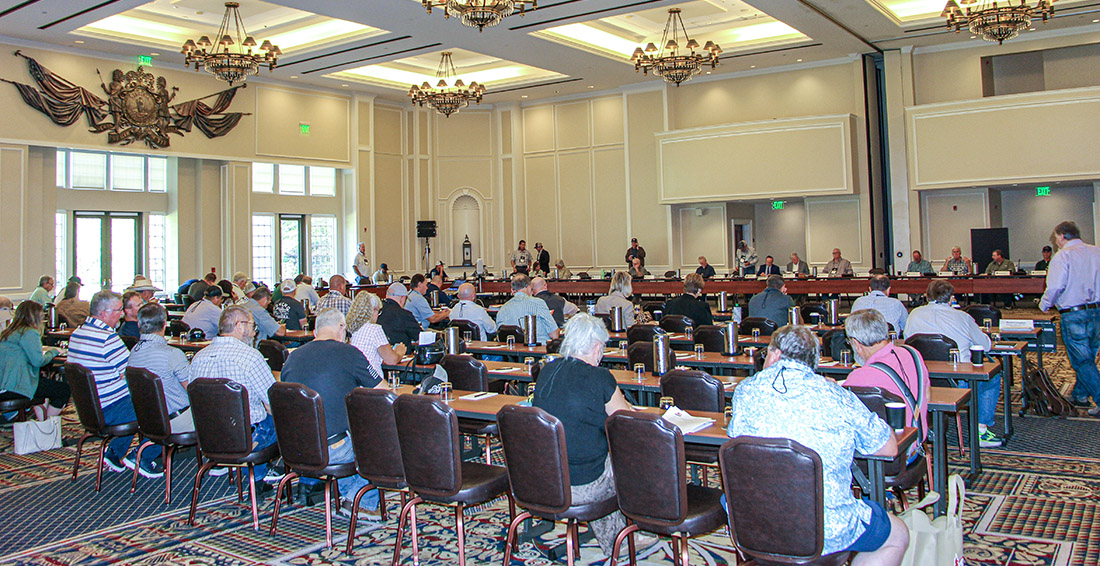 address challenges facing the industry.
Held against the backdrop of colonial Virginia during the nation’s 250th anniversary, the meeting featured industry presentations, logging and sawmill tours, legislative discussions and recognition of longtime logging advocates.
Virginia Logging Operations Take Center Stage
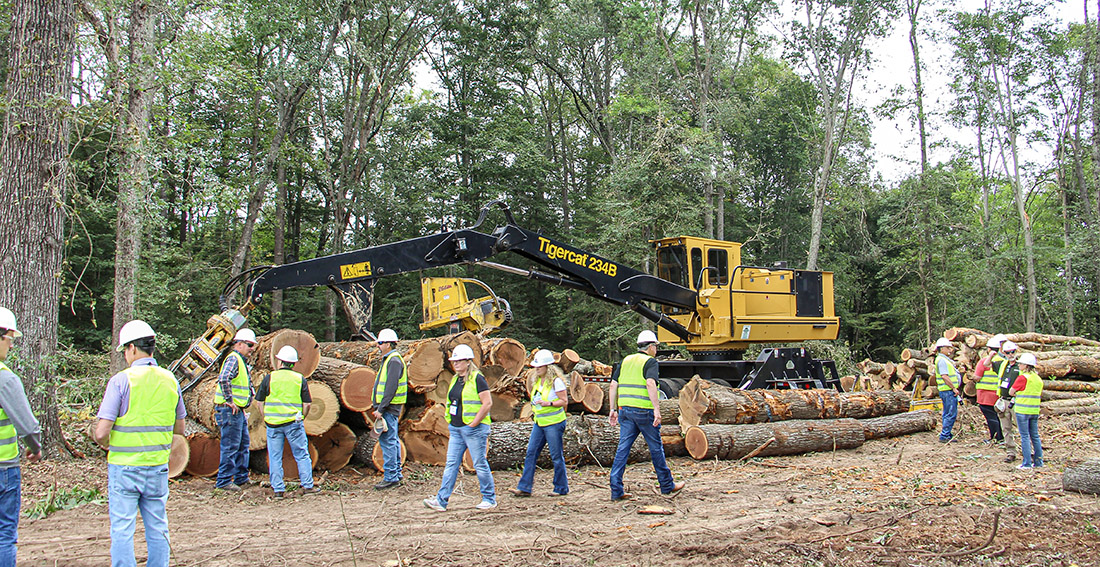
The annual logging tour brought attendees to Elsing Green Plantation, a historic estate and wildlife refuge along Virginia’s Pamunkey River, where Sickal’s Logging Inc. was working.
Landowner Edgar Lafferty IV explained that timber income helps fund restoration of the centuries-old property, which encompasses 2,200 acres of timberland, farmland and wildlife habitat. “We use timber management as a tool but also want to preserve the eloquence of it,” Lafferty told the group. Ray Sickal and his three sons hosted the harvesting demonstration, discussing East Coast logging practices and regulatory challenges.
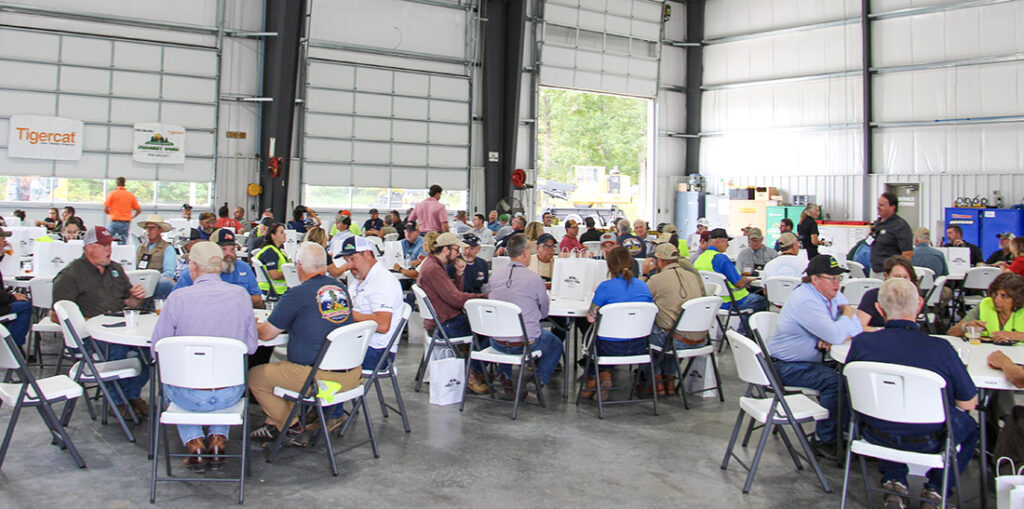
Attendees also visited Ball Lumber Co. in Millers Tavern, Va., a family-owned southern yellow pine sawmill producing 40 MMBF annually. General Manager Lewis Ball discussed challenges surrounding regulations, sawmill byproducts and declining competition among regional paper mills.
Rising Diesel Costs, Declining Pulpwood Demand Challenge Loggers
Forisk Consulting’s Shawn Baker reported that rising diesel prices added approximately $105 million to the delivered cost of wood in September alone, placing additional pressure on logging contractors.
 Meanwhile, the logging workforce has declined approximately 40% over the past two decades. “We can’t have an industry that declines 20% every decade,” Baker said. “It’s unsustainable.”
Forisk also reported that southern pulpwood demand has fallen 23% over the past decade, while the U.S. has lost 26% of its virgin fiber pulp capacity in 11 years, equivalent to 70 million tons of wood.
With housing starts projected to remain near 1.3 million annually over the next two years, Baker suggested limited near-term relief for timber markets.
Forest Service Targets Increased Timber Harvesting
U.S. Forest Service Deputy Chief John Crockett said the agency exceeded its annual timber output target and is working to expand sustainable timber harvesting on national forest lands.
Crockett said federal harvest levels need to reach approximately 6 billion board feet annually to help reduce wildfire risk, compared to historical lows near 1.5 billion board feet. He highlighted diesel price adjustments in timber sale appraisals and contract extensions of up to two years as tools available to contractors.
“We want to be part of the solution,” Crockett said.
Crockett also addressed the Forest Service’s reorganization, including relocating its headquarters to Salt Lake City and replacing regional offices with state-based leadership. He said the agency intends to redirect more resources toward field operations.
Biomass, Data Centers Offer New Timber Market Opportunities
Enviva CEO Glenn Nunziata discussed emerging opportunities for wood fiber as traditional pulpwood markets continue to shrink. Enviva currently sells approximately 6.5 million tons of wood pellets annually overseas. While upcoming U.K. subsidy changes could reduce demand, Nunziata pointed to growing markets in Poland, Europe and Asia.
He also identified expanding U.S. data center electricity demand as a potential opportunity for domestic biomass energy. “There’s never been a willingness like there is today for hyperscalers, tech companies and developers to pay more for power,” Nunziata said. Clarifying biomass eligibility under the federal 45Y clean electricity tax credit could help unlock that demand, he added.
Virginia State Forester Terry Lasher reinforced the importance of maintaining strong timber markets to support active forest management. “No markets, no management,” Lasher said. “Market your message, communicate it with clarity.”
Johnny Thompson of LandMark Spatial Solutions also gave a talk on drones, artificial intelligence and TimberHaul, a new application for dispatching logging trucks and tracking scale tickets.
ALC Honors Industry Leaders, Welcomes New President
 The annual Log A Load for Kids auction raised $69,775 for Children’s Miracle Network Hospitals, surpassing last year’s $61,900.
Henry Schienebeck of the Great Lakes Timber Professionals Assn. (GLTPA) received the ALC Activist of the Year Award, while Oregon’s Bruce Zuber received the President’s Award. Retiring Associated California Loggers Executive Director Eric Carlson was recognized for 20 years of service.
During its membership meeting, ALC also discussed legislative priorities, including wildfire reduction, timber market expansion and the Fix Our Forests Act.
The meeting concluded with outgoing ALC President Dave Cupp of Walsh Timber in Zwolle, La., passing the gavel to Alabama logger Freddy Tidwell, the 2016 Alabama Outstanding Logger of the Year.
“It’s going to be tough, but it’s always tough. That’s what we’re known for,” Tidwell said.
Chuck Ames was elected first vice president, and Executive Director Scott Dane signed a two-year contract extension.
The 2027 American Loggers Council annual meeting is scheduled for September 28–October 2 in Florence, Ala.
Latest News

Logging Innovator Michael Scott Melcher Dies In Oregon
Way too soon, Sweet Home, Ore. logger Michael Scott Melcher passed away on August 28 at the age of 59. He is survived by his wife of 34 years, Wendi, sons Nathaniel and Christopher and…
WANT MORE CONTENT?
Spanning seven decades since its inception in 1952, Timber Harvesting highlights innovative and successful logging operations across the U.S. and around the world. Timber Harvesting also emphasizes new technology and provides the best marketing vehicle for the industry’s suppliers to reach the largest number of loggers in North America and beyond.
Call Us: 800.669.5613