Machine Innovator Neil Peterson Dies
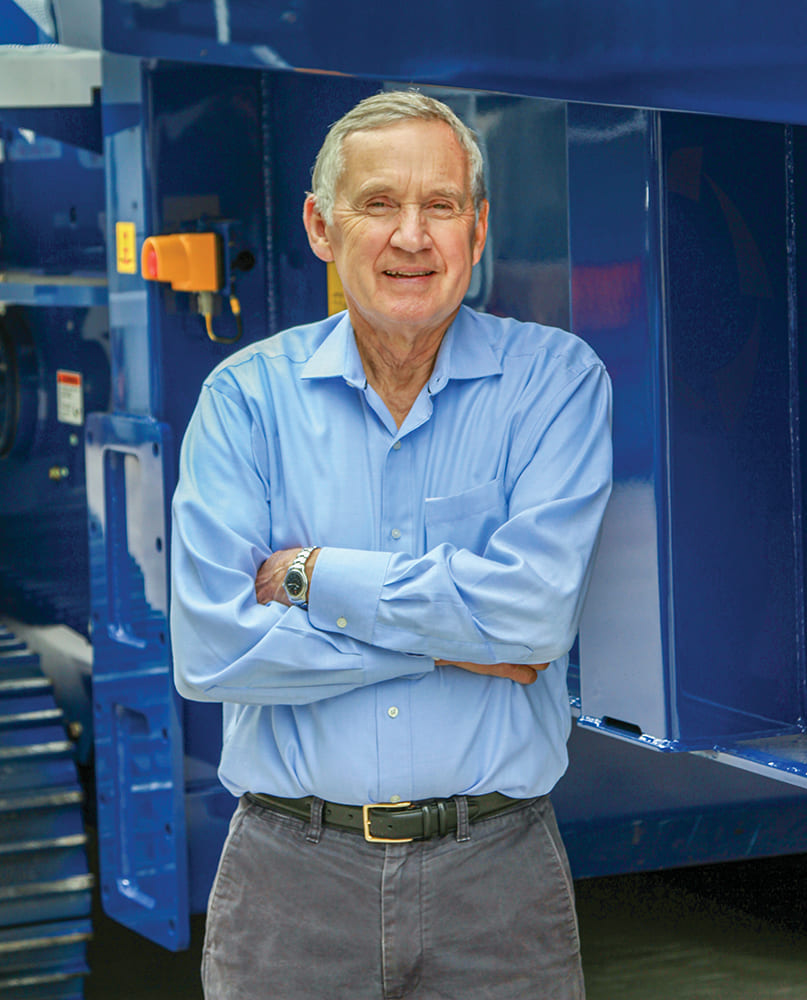 A memorial service was held October 29 in Pleasant Hill, Ore. for forest machinery pioneer and innovator Neil Peterson, the driving force behind Peterson Pacific Corp. that revolutionized in-woods and mobile delimbing, debarking and chipping. Peterson was not just a pioneer in his field but also a generous philanthropist, a guiding force for his team, and a beacon of opportunities for his employees.
Peterson initially began working with his father, Wilber, at Peterson & Sons, a construction and land clearing company that opened up a satellite chip plant in Pleasant Hill in the late 1970s. Concerned that the plant’s chip quality wasn’t good enough for export markets, Peterson set about developing a better way to produce clean chips.
Peterson settled on a chain flail design that could handle multiple small stems effectively and simultaneously. The system was a game changer in terms of quality and production. Peterson built a prototype debarker and two additional machines for the chip plant. Customer Longview Fibre bought the first unit Peterson sold after being impressed with the machine’s chip output.
Peterson established Peterson Pacific Corp. in 1981 and began refining his machine. The first machine was sold to a chipping contractor, Edmund Co., in Tacoma, Wash.
Soon after, Peterson and his wife, Linda, who was the company’s marketing and HR director, hit the road in 1986 on a legendary demo-sales trip that blew away major back East paper producers and their chipping contractors with the machine’s performance.
The success led to introduction of the 4800 delimber-debarker, which was closely followed by the DDC 5000—a delimber-debarker and chipper close-coupled and mounted on the same frame—in early 1989. Scott Paper was so impressed by Peterson and his machines that it ordered the first DDC 5000 in 1988 before it was ever built.
More advances followed, as Peterson Pacific became a global leader in machinery for mobile chipping and grinding in a variety of machines, sizes and applications.
Peterson always took pride in how his machines aided in tasks like mulching, compost creation and storm cleanup. His machines not only increased the longevity of landfills but also transformed waste wood into valuable commodities and made recycling efforts more efficient.
In 2007, Peterson Pacific Corp. embarked on a new chapter when it was sold to Astec Industries. Peterson remained with his company and transitioned into a research and development role.
Latest News
Weyco, Union Reach Contract Agreement
In late October, after a 48-day strike, Weyerhaeuser reported the successful resolution of a work stoppage involving members of the International Assn. of Machinists and Aerospace Workers union in Oregon and Washington. Weyerhaeuser has approximately…
Deere’s Dubuque Factory Celebrates 75 Years
The John Deere Dubuque Works factory opened in 1947, and now has 3,000 employees, half in production and half in engineering, supply, and customer support. General Manager Mark Dickson says post-World War II labor shortages forced Deere to build its new plant away from its tractor plants in Waterloo, Iowa. Dubuque welcomed the new plant, which…
WANT MORE CONTENT?
Spanning seven decades since its inception in 1952, Timber Harvesting highlights innovative and successful logging operations across the U.S. and around the world. Timber Harvesting also emphasizes new technology and provides the best marketing vehicle for the industry’s suppliers to reach the largest number of loggers in North America and beyond.
Call Us: 800.669.5613